Turning
A machine park for diameters from 2 mm up to 280 mm.
Turning with CNC machines is foreseen for parts of larger dimensions but above all for parts that represent greater challenges in terms of complexity, material hardness and precision.
Machining is completed on machining centres, with heat treatment and grinding.
34 CNC lathes:
- 14 bar lathes with bar capacity up to 65 mm
Biglia - CMZ - 7 re-working lathes with automatic loading and max. 150 mm diameter
Doosan – CMZ- Famar - Biglia - 5 lathes with manual loading for diameters up to 280 mm
Doosan - 3 hard turning and automatic loading lathes
Takamaz - 6 CNC sliding headstock lathes with bar capacity up to 20 mm
Citizen - Gildemeister


Types of CNC turning
The choice of turning type depends on the part geometry, material, and batch size.- Fixed-headstock bar turning: used for series production of cylindrical parts from round, hexagonal, or profiled bars.
- Fixed-headstock chucking: generally used for larger parts or the rework of castings. Most chucking lathes feature automatic loading.
- Hard turning: used for post-hardening finishing on steel > 55 HRC with CBN inserts. In many cases, it replaces cylindrical grinding with shorter cycle times. They feature automatic loading.
- Sliding-headstock (Swiss-type) turning: used for small parts with a high L/D ratio: pins, dowels, bushings, special screws for the medical, dental, and hydraulic sectors.
For more complex turning operations, special equipment such as a Y-axis, driven tools, and high-pressure pumps is required.
For long series, twin-spindle and twin-turret lathes are available, allowing overlapping operations in hidden time.
Machinable materials
The table summarizes the main materials machined by turning and their most frequent applications.
| Category | Materials | Frequent applications |
|---|---|---|
| Quenched and tempered steels | C45, 39NiCrMo3, 42CrMo4, 40CrMnMo7 | Structural components, shafts, flanges, industrial machinery |
| Case-hardening steels | 18NiCrMo4, 16MnCr5, 20MnCr5 | Gears, pins, hydraulic components with hardened surfaces |
| Nitriding steels | 41CrAlMo7 | Stems, guides, components with high wear resistance |
| Stainless steels | AISI 304, 316, 420, 440, 630 (17-4PH) | Food, medical, marine, fluid-contact components |
| Free-cutting steels | ETG 88, ETG 100, AVP, AVZ | High-volume small parts, bushings, and hydraulic components |
| Aluminum alloys | Anticorodal (6082), Ergal (7075), Al 2011 | Lightweight components, pneumatic sector, and machinery |
| Titanium | Gr. 2, Ti-6Al-4V (Gr. 5) | Medical, dental, biocompatible components |
| Copper and alloys | Brass, aluminum bronze | Bushings, marine propellers, electrical components |
Precision and tolerances
The achievable tolerance depends on the machine-tool-material-strategy combination. The following values represent the typical capabilities of the department.
| Type of machining | Tolerance | Roughness | Typical application |
|---|---|---|---|
| Bar turning | ±0.01–±0.02 mm | Ra 0.8–1.6 µm | Series components, free-cutting steels |
| Precision turning | ±0.005–±0.01 mm | Ra 0.4–0.8 µm | Sealing seats, mating surfaces |
| Post-hardening hard turning | ±0.005–±0.01 mm | Ra 0.2–0.4 µm | Alternative to grinding on hardened parts |
| Sliding headstock (Swiss-type) | ±0.005–±0.01 mm | Ra 0.4–0.8 µm | Pins, dowels, bushings Ø2–20 mm |
| Threading | 6g/6H (ISO 965) | - | Metric, gas, UNC/UNF, special |
| Reamed / bored holes | H6–H7 (ISO 286) | Ra 0.4–0.8 µm | Bearing seats, sliding guides |
Download the Gamba brochure.
Discover how Gamba can support your business with high precision machining for the oil and gas industry.
Difference between CNC turning and milling
Turning and milling are complementary machining processes. The choice depends on the geometry of the component.
| Feature | CNC Turning | CNC Milling |
|---|---|---|
| Kinematics | The part rotates, the tool translates | The tool rotates, the part is stationary or translates |
| Ideal geometries | Cylindrical: shafts, bushings, pins, stems | Prismatic: slots, pockets, flat surfaces, 3D profiles |
| Typical axes | 2 axes (Z + X), up to 4 with driven tools | 3, 4, or 5 axes for complex geometries |
| Typical finish | Ra 0.2–0.8 µm | Ra 0.4–3.2 µm |
| Series productivity | High on bar parts (unmanned cycles) | High on prismatic parts with twin pallets |
Industrial applications
Turned components are used in sectors where dimensional precision and reliability are critical requirements.
- Hydraulics and pneumatics: valve bodies, stems, bushings, pistons, distributors in case-hardening and free-cutting steels. Typical hole tolerances: H7 or better.
- Machine tool equipment: components for vises, chucks, clamping systems in hardened and ground steels.
- Industrial machinery: shafts, flanges, and structural components up to Ø250 mm in C45, AISI 630, Ergal.
- Medical and dental: biocompatible titanium and stainless steel components with full batch traceability.
- Food and marine: food-contact components in AISI 316, aluminum bronze propellers.
Quality control
Lathes are equipped with probes and in-machine measuring systems that detect critical dimensions during the cycle and automatically correct tool offsets to compensate for insert wear.
Gamba controls quality during the production process according to metrics established by the control sheet. Each department is equipped with dedicated latest-generation measuring instruments.
The measuring equipment includes over 500 manual instruments, 1,000 thread gauges, and 3,000 plug gauges, calipers, and templates, all internally certified with 0.1 µm precision equipment.
Complete cycle: from bar to finished component
A complex component follows this flow, managed entirely in-house:
- CNC Turning: roughing and semi-finishing from bar or chucking
- CNC Milling: slots, cross holes, profiles on 3-, 4-, or 5-axis centers
- Heat treatment: quenching and tempering, case hardening, or nitriding
- Hard turning or grinding: post-treatment finishing for final tolerances
- Honing: where required, Ra ≤ 0.05 µm on precision holes
- Final control: dimensional verification and certification
Integration within the same facility eliminates transport between suppliers, reduces lead times, and ensures concentricity between turned and milled features.
Frequently asked questions about CNC turning
It is a process where the part rotates on a spindle while cutting tools move along trajectories programmed via G-code. Numerical control ensures micrometric repeatability with tolerances of ±0.005–±0.01 mm on every piece in the batch.
Quenched and tempered, case-hardening, and nitriding steels, stainless steels (AISI 304, 316, 420, 440, 630), hardened steels up to 62 HRC, aluminum, titanium, brass, and bronze. Each material requires specific cutting parameters and tools.
Dimensional tolerances from ±0.005 mm and roughness down to Ra 0.2 µm with hard turning. By comparison, a manual lathe typically reaches ±0.05 mm. Final tolerances depend on the machine-material-strategy combination.
In turning, the part rotates: ideal for cylindrical geometries (shafts, bushings, pins). In milling, the tool rotates: suitable for flat surfaces, slots, and 3D profiles. In many components, the two processes are combined in the same production cycle.
It is the finish turning of hardened steels (> 55 HRC) using CBN inserts. In many cases, it replaces cylindrical grinding with shorter cycle times, achieving a roughness of Ra 0.2–0.4 µm and tolerances of ±0.005–±0.01 mm.
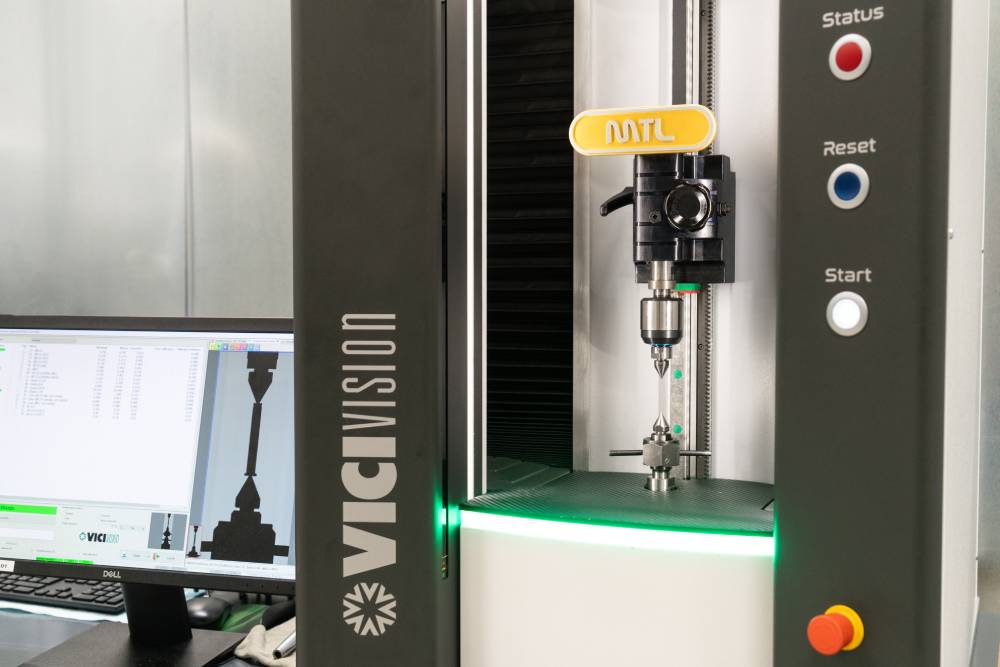
In-process control
Ensuring compliance with dimensions on complex machining operations, including with heat treatment, requires an organisation with adequate skills and equipment.
Other types of processing
We manage all stages of the production process internally to ensure quality control and adherence to schedules.


Would you like more information?
Fill in the contact form or contact us directly at the following addresses:
 Call us
 Email us